American Express Membership Rewards guide: how much are Amex points worth?
Learn the main ways to use Membership Rewards points in Canada, their practical baseline value and when transfers to Aeroplan and other programs can make sense.

In this guide
- A simple reference: 1,000 points = $10 for certain credits
- Not all redemption methods provide the same value
- Why transfers can increase value
- A 1:1 transfer does not automatically mean better value
- Transfers are final
- Flexibility itself has value
- What is the best way to use MR points?
- A high cents-per-point value is not always a better decision
- Why MR can make card comparisons harder
- Carte IQ and Membership Rewards
- Common mistakes to avoid
- How much are 100,000 Amex MR points worth?
- Can MR points be transferred to Aeroplan?
- Can I move the points back to MR after a transfer?
- Is PayPal a good use of MR points?
- Should I always transfer MR points to Aeroplan?
- Key takeaway
- Official sources consulted
- Suggested internal links
- Carte IQ CTA
American Express Membership Rewards points are especially interesting because they are not tied to a single redemption method.
A cardholder can use them in several ways, including applying points to certain purchases or balances, using them for travel and other rewards, or transferring them to selected loyalty-program partners.
That flexibility creates an important characteristic:
A Membership Rewards point does not always have the same value depending on how it is used.
A simple reference: 1,000 points = $10 for certain credits
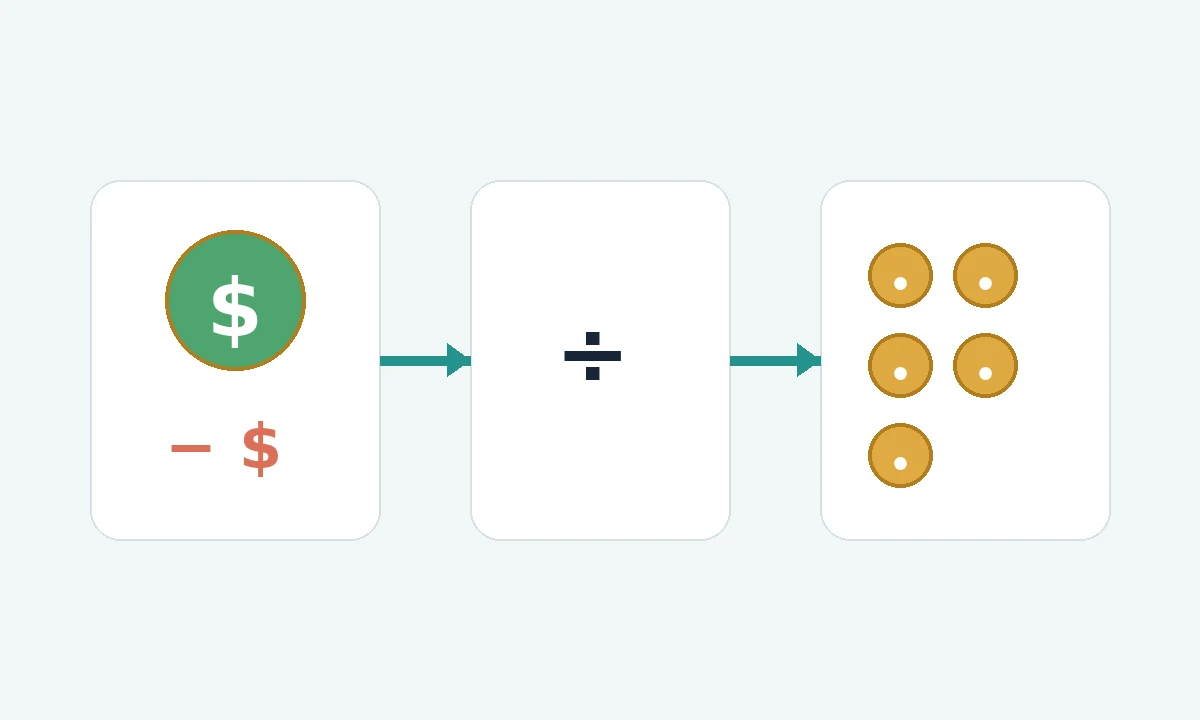
American Express Canada currently displays a rate of 1,000 Membership Rewards points for a $10 credit through options that include Pay Balance with Points and Use Points for Purchases on eligible cards.
That equals:
1 cent per point.
This is a useful baseline for analyzing MR points because it is simple and relatively flexible.
For example:
- 10,000 points → $100;
- 25,000 points → $250;
- 50,000 points → $500;
- 100,000 points → $1,000.
That does not mean an MR point is always worth exactly one cent. Some uses may provide less, while some travel-program transfers may produce more.
Not all redemption methods provide the same value
American Express currently shows, for example, 1,000 points for a $7 credit when points are used to pay with PayPal.
That equals about 0.7 cent per point.
By contrast, 1,000 points for a $10 eligible credit equals one cent per point.
For Carte IQ, that difference is fundamental.
Saying a card earns 5 Membership Rewards points per dollar is not enough. At one cent per point, that can represent roughly 5% value on an eligible purchase. At 0.7 cent, the same earn rate is closer to 3.5%.
How you redeem directly changes the economic value of the earn rate.
Why transfers can increase value
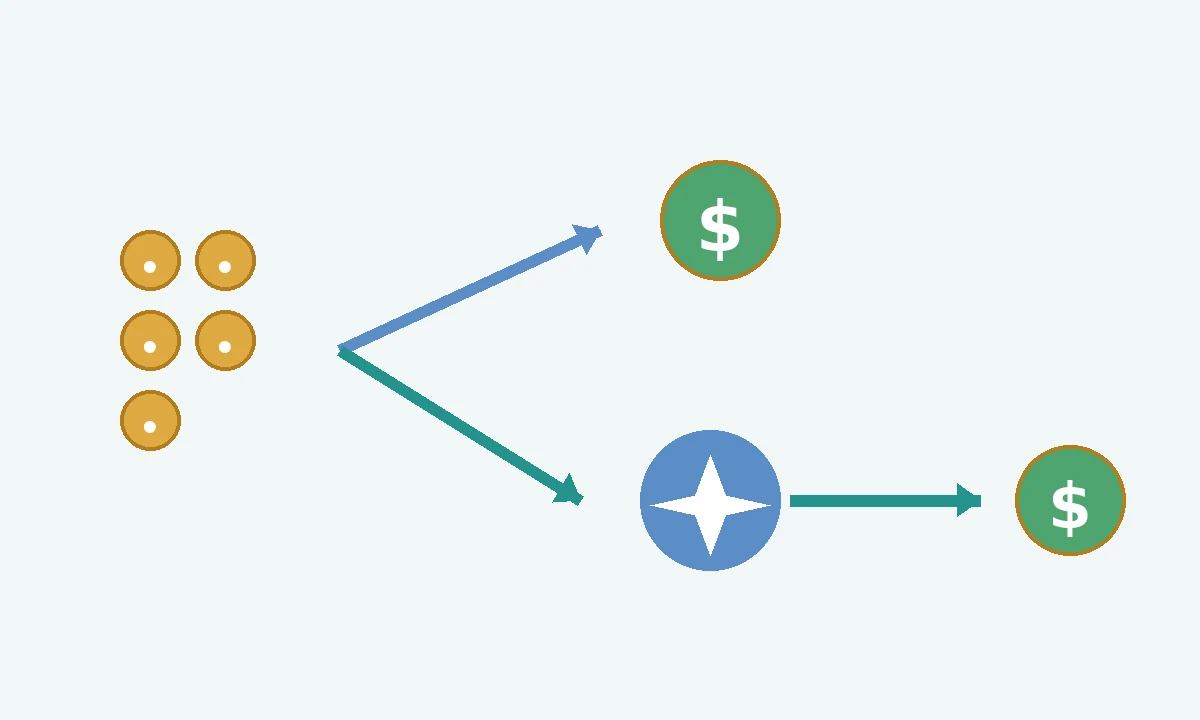
One of the main attractions of Membership Rewards is the ability to transfer points to selected loyalty programs.
According to current American Express Canada terms, published ratios include examples such as:
- Aeroplan: 1,000 MR → 1,000 Aeroplan points;
- British Airways Executive Club: 1,000 MR → 1,000 Avios;
- Air France KLM Flying Blue: 1,000 MR → 750 miles;
- Cathay Pacific: 1,000 MR → 750 Asia Miles;
- Delta SkyMiles: 1,000 MR → 750 SkyMiles;
- Etihad Guest: 1,000 MR → 750 miles;
- Marriott Bonvoy: 1,000 MR → 1,200 Bonvoy points;
- Hilton Honors: 1,000 MR → 1,000 Hilton Honors points.
Partners and ratios can change. Always verify the rate displayed by Amex when you are ready to transfer.
A 1:1 transfer does not automatically mean better value
Suppose you transfer 50,000 MR points to Aeroplan at 1:1.
You receive 50,000 Aeroplan points.
If those points allow you to avoid $850 of net cost on a flight, the realized value may be higher than the $500 available from using the 50,000 MR points directly at one cent each.
But if the available Aeroplan booking creates only about $400 of net value, the transfer is less attractive than the direct credit.
The right question is not:
Which program sounds more prestigious?
It is:
How much value will I actually receive after the transfer?
Transfers are final
This is one of the most important rules.
American Express states that once Membership Rewards points are transferred to a third-party program, the transfer cannot be reversed.
Amex also recommends confirming that the desired reward is available before transferring points.
That supports a prudent strategy:
Keep MR points flexible until you have identified a specific use.
Flexibility itself has value
Imagine you hold 100,000 MR points.
As long as they remain in Membership Rewards, several paths can remain open: eligible statement credits, certain purchases, transfers to Aeroplan, Avios, Marriott and other eligible programs.
Once 100,000 points are transferred to Aeroplan, they become Aeroplan points and are subject to Aeroplan’s rules.
Even if you expect to use Aeroplan most of the time, keeping points flexible can have strategic value.
Carte IQ refers to this as optionality value: two rewards with the same nominal value today are not necessarily equivalent if one gives you many more future choices.
What is the best way to use MR points?
There is no single answer.
For simplicity
Using eligible statement-credit options around one cent per point is easy to understand and does not require finding reward seats or learning several loyalty programs.
For higher travel upside
Transfers to selected partners can offer more potential value, but they require more work and introduce more variables.
For flexibility
Waiting to transfer until a specific use is found can be an excellent strategy.
A high cents-per-point value is not always a better decision
Suppose a business-class booking produces 3 cents per point, but you would never have bought that ticket with cash.
By contrast, applying points at one cent each against $1,000 of purchases you would have made anyway creates a very real saving.
It is therefore useful to distinguish:
- theoretical maximum value;
- value replacing real spending;
- personal preferences.
Carte IQ does not consider a user who chooses a one-cent statement credit to be “using points badly” just because a travel enthusiast might obtain more elsewhere.
Why MR can make card comparisons harder
Take a card earning 5 MR per dollar in a category.
With a one-cent valuation:
5 MR/$ ≈ 5% value.
With a 1.5-cent effective valuation from a successful travel redemption:
5 MR/$ ≈ 7.5%.
But the second figure is not guaranteed.
A fair comparison against a cash-back card should therefore use multiple scenarios rather than one optimistic value.
Carte IQ and Membership Rewards
Carte IQ can distinguish several valuation profiles.
For example:
- simple scenario: redemption near the value of an eligible statement credit;
- travel scenario: potentially higher value depending on the transfer partner and booking;
- conservative scenario: a deliberately cautious assumption when future use is unknown.
The engine should keep these valuation assumptions separate from the card’s official earn rules.
That way, a recommendation can explain why a card ranks first and which assumption that conclusion is sensitive to.
Common mistakes to avoid
Automatically paying with points through PayPal
The currently published rate of roughly 0.7 cent per point is lower than the one-cent value available through some other eligible credit options.
Transferring before availability is confirmed
Transfers are irreversible.
Assuming a 1:1 ratio guarantees high value
Value depends on the destination program and final redemption.
Accumulating without a strategy
Flexibility is valuable, but programs can change their terms.
Spending more to earn a bonus or more points
Rewards should optimize planned spending, not increase it.
Frequently asked questionsHow much are 100,000 Amex MR points worth?
At one cent per point through an eligible credit option, 100,000 points equal $1,000. A travel-program redemption may produce a different value.
Can MR points be transferred to Aeroplan?
Yes. American Express currently displays a 1,000 MR to 1,000 Aeroplan ratio for eligible accounts.
Can I move the points back to MR after a transfer?
No. American Express states that transfers to partner programs are final.
Is PayPal a good use of MR points?
American Express currently shows 1,000 points for $7 through PayPal, which is lower than the $10 value available through some eligible statement-credit options.
Should I always transfer MR points to Aeroplan?
No. A transfer makes sense only when the planned Aeroplan use produces enough value and matches your needs.
Key takeaway
Membership Rewards is powerful mainly because of its flexibility.
A straightforward baseline around one cent per point exists for certain uses, while transfers to partners can sometimes produce more. That upside should not be confused with guaranteed value.
A strong strategy is often to preserve flexibility until a specific redemption justifies giving it up.
Official sources consulted
- American Express Canada — Membership Rewards: https://www.americanexpress.com/en-ca/benefits/rewards/membership-rewards/
- American Express — Pay Balance with Points: https://www.americanexpress.com/en-ca/benefits/rewards/membership-rewards/pay-balance-with-points/
- American Express — Travel partners and transfers: https://www.americanexpress.com/en-ca/rewards/membership-rewards/travel/airlines
- American Express — Membership Rewards Terms and Conditions: https://www.americanexpress.com/content/dam/amex/en-ca/benefits/rewards/membership-rewards/membership-rewards-terms-and-conditions.pdf
Suggested internal links
- Aeroplan guide
- How much is a reward point really worth?
- Should you transfer points or redeem them directly?
- Aeroplan vs Membership Rewards vs Scene+
Carte IQ CTA
Carte IQ compares cards by considering not only how many points they earn, but also how you realistically plan to use those points.