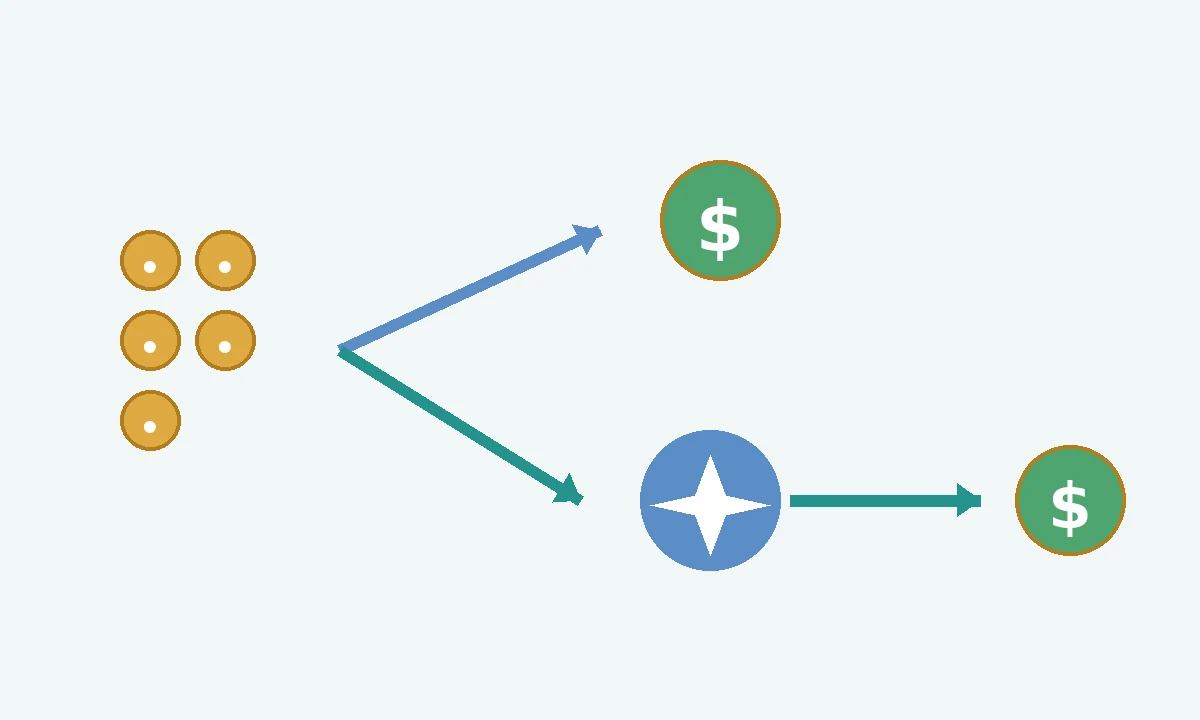
Should you save your points or use them sooner?
Learn the risks of holding reward points for too long, how expiry rules work and how to choose a sensible time to redeem.

In this guide
- Points are not a savings account
- What is a devaluation?
- Why saving points can still be smart
- Why accumulating with no objective is different
- Expiry and inactivity
- Should you redeem as soon as you can get one cent per point?
- A useful rule: save toward a realistic objective
- Travel points and near-cash points should not be managed the same way
- When it may make sense to use points sooner
- When continuing to accumulate can make sense
- A hybrid strategy
- Example
- Do points become more valuable over time?
- Is it bad to have a lot of points?
- Can Aeroplan change point prices?
- Are Aeroplan points currently expiring?
- How many points should I keep?
- Key takeaway
- Official sources consulted
- Suggested internal links
- Carte IQ CTA
Watching a points balance grow can be satisfying.
50,000 points. 100,000. 300,000.
But unlike money in an interest-bearing account, loyalty points are generally not designed to increase in value over time.
The program can change its rules, require more points for a reward or alter its available partners.
That does not mean you should redeem every point immediately.
But there is an important difference between saving toward a specific goal and holding points indefinitely with no strategy.
Points are not a savings account
A Canadian dollar in your account remains one Canadian dollar in nominal terms.
A loyalty point is closer to a contractual entitlement to access certain rewards under the program’s rules.
Those rules can change.
American Express states in its Membership Rewards terms that the program may change features such as earn rates, rewards, partners, limits or other conditions subject to applicable rules.
Airline programs can also change their reward charts.
Aeroplan adjusted several tiers again on June 1, 2026, with both increases and decreases.
What is a devaluation?
A devaluation occurs when more points are required for a comparable reward or when redemption options become less favourable.
Simplified example:
Today:
50,000 points → Ticket X
Later:
60,000 points → comparable Ticket X
Your 50,000 points did not disappear.
But their purchasing power fell.
It resembles a form of inflation inside the loyalty program.
Why saving points can still be smart
There are good reasons to hold points.
You are preparing for a specific reward
If your trip requires 80,000 points and you currently have 65,000, continuing to accumulate is reasonable.
Current redemptions are weak
Waiting a few months can make sense when the value available today is poor and a real future trip is already planned.
Your points remain flexible
Transferable currencies such as Membership Rewards can preserve substantial strategic value as long as they remain flexible and have not yet been moved into a more specialized program.
Why accumulating with no objective is different
If you have held 300,000 points for several years with no clear plan, you are taking program-change risk without receiving anything in return.
Points do not pay dividends.
They do not earn interest.
Programs generally do not reward you simply because you held the balance for five years.
Accumulating is therefore not a goal by itself.
Expiry and inactivity
Some programs also have inactivity rules.
Aeroplan
The normal policy provides that an account can become inactive after 18 months with no eligible activity.
Aeroplan has temporarily suspended point expiry until November 30, 2026, after which the normal policy is expected to resume based on current published information.
Scene+
Scene+ indicates that points can be lost when an account is closed for inactivity.
Registered accounts may be affected after 24 months in certain situations, while unregistered accounts may face a much shorter period.
Rules vary by program and can change.
Should you redeem as soon as you can get one cent per point?
Not necessarily.
If you hold flexible points and reasonably expect a future trip to create more value, waiting can make sense.
But future potential should be weighed against time and risk.
A certain $500 saving today may be more useful than a possible $700 redemption three years from now.
The right decision depends on your goals.
A useful rule: save toward a realistic objective
One simple approach is to accumulate for an identifiable goal over a reasonable time horizon.
For example:
- a trip next year;
- a family vacation in 18 months;
- a flight you are actively monitoring;
- everyday expenses where the points can already be applied.
The more distant and vague the goal, the greater the risk of holding points.
Travel points and near-cash points should not be managed the same way
A program such as Scene+ offers several redemptions around a relatively stable one cent per point.
In that situation, keeping points for years in the hope of a dramatically higher value may have little benefit.
Aeroplan is different: some bookings can produce highly variable values.
Membership Rewards adds another dimension because you can keep the points flexible and transfer later.
The strategy therefore depends on the type of rewards currency.
When it may make sense to use points sooner
Redeeming can be reasonable when:
- you have a planned expense or trip;
- the value is satisfactory;
- the program has announced an upcoming devaluation;
- inactivity is a risk;
- there is no realistic reason to keep the balance;
- you can reduce a meaningful expense today.
When continuing to accumulate can make sense
Waiting can be reasonable when:
- you have a specific goal;
- you are only a reasonable number of points short;
- current value is particularly poor;
- your points remain flexible;
- the time horizon is short or medium.
A hybrid strategy
For many people, the best approach is neither “burn everything” nor permanent hoarding.
You can:
- keep a reserve tied to a specific objective;
- use the excess regularly;
- transfer only when a booking is found;
- avoid leaving a very large balance with no purpose.
It is the same principle Carte IQ applies to cards: optimize without maximizing at any cost.
Example
You have 120,000 MR points.
You expect a trip in 12 months that may require about 80,000 transferred points.
A reasonable strategy might be:
- keep 80,000 to 100,000 MR flexible for the trip;
- use part of the excess for useful credits if that suits you;
- transfer to the airline program only after availability is confirmed.
You preserve a buffer without necessarily locking up your entire balance for years.
Frequently asked questionsDo points become more valuable over time?
Not necessarily. Programs can change rules and increase the number of points needed for rewards.
Is it bad to have a lot of points?
No. The larger risk is accumulating for a very long time without a purpose.
Can Aeroplan change point prices?
Yes. Aeroplan changed several reward-chart levels on June 1, 2026.
Are Aeroplan points currently expiring?
Based on current published information, expiry is temporarily suspended until November 30, 2026.
How many points should I keep?
There is no universal number. A reserve tied to a realistic goal is easier to justify than a large balance with no objective.
Key takeaway
Points are meant to be used.
That does not mean redeeming immediately, but accumulating should serve a purpose.
A healthy strategy is to keep enough points for realistic goals while avoiding the temptation to treat a loyalty program like a very long-term savings account.
Official sources consulted
- Air Canada — 2026 reward update: https://www.aircanada.com/ch/fr/aco/home/aeroplan/news/2026-an-update-on-the-aeroplan-flight-reward-chart.html
- Air Canada — Inactivity policy: https://www.aircanada.com/ca/fr/ado/home/aeroplan/your-aeroplan/inactivity-policy.html
- Air Canada — Temporary expiry suspension: https://www.aircanada.com/ca/fr/ado/home/aeroplan/news/points-expiry-suspended.html
- Scene+ — How points work and inactivity: https://help.sceneplus.ca/hc/fr-ca/articles/46899568934683-Que-sont-les-points-Sc%C3%A8ne-et-comment-fonctionnent-ils
- American Express — Membership Rewards Terms: https://www.americanexpress.com/content/dam/amex/en-ca/benefits/rewards/membership-rewards/membership-rewards-terms-and-conditions.pdf
Suggested internal links
- Aeroplan guide
- Membership Rewards guide
- Scene+ guide
- Should you transfer points or redeem them directly?
Carte IQ CTA
Carte IQ helps compare the value of rewards today instead of assuming that keeping points longer is always better.