Should you switch credit cards often or keep the same ones?
Switching cards can earn welcome bonuses, while keeping older accounts can support a stable credit profile. Learn why a mixed strategy is often more balanced.

In this guide
- Why keeping some cards for a long time can help
- Available credit matters too
- Why switching cards can still be a good decision
- What about welcome bonuses?
- The problem with switching too frequently
- Switching cards is not the same as closing the old one
- What if the old card has an annual fee?
- The “core cards + opportunities” strategy
- When should you be especially cautious?
- An example
- What Carte IQ should recommend
- Key takeaway
- Is it bad for my score to close an old credit card?
- Should I keep my oldest card forever?
- How long should I wait between card applications?
- Is it a good idea to open cards only for bonuses?
- Is it better to keep one card for a very long time?
- Sources consulted
- Related articles
- Compare based on your situation
A new credit card appears with an excellent welcome offer. Your current card, meanwhile, has been in your wallet for ten years.
Should you switch?
Or should you keep the same cards forever simply because they are old?
For many consumers, the best answer lies between the two extremes: keep a stable base of useful cards and make selective changes when they create meaningful value.
Carte IQ refers to this concept as keeping “core” cards while making occasional, deliberate changes.
Why keeping some cards for a long time can help
Your credit history is one of the elements reflected in your credit file.
The Financial Consumer Agency of Canada (FCAC) notes that lenders like to see a longer, stable credit history and that keeping accounts open and active for a long time can help your credit score.
An older account can therefore have value beyond the rewards it earns.
Length of credit history
Opening a new card adds a new account to your file.
Closing an old account can, depending on your situation and the scoring model being used, weaken part of your credit history and reduce the amount of credit available to you.
FCAC suggests considering keeping an older account when it:
- has no annual fee;
- is easy to manage;
- can be used occasionally to remain active.
That does not mean every card should stay open forever.
But automatically closing your oldest card simply because a newer product looks more attractive may be unnecessary.
Available credit matters too
Suppose you have two cards:
- Card A: $10,000 limit;
- Card B: $10,000 limit.
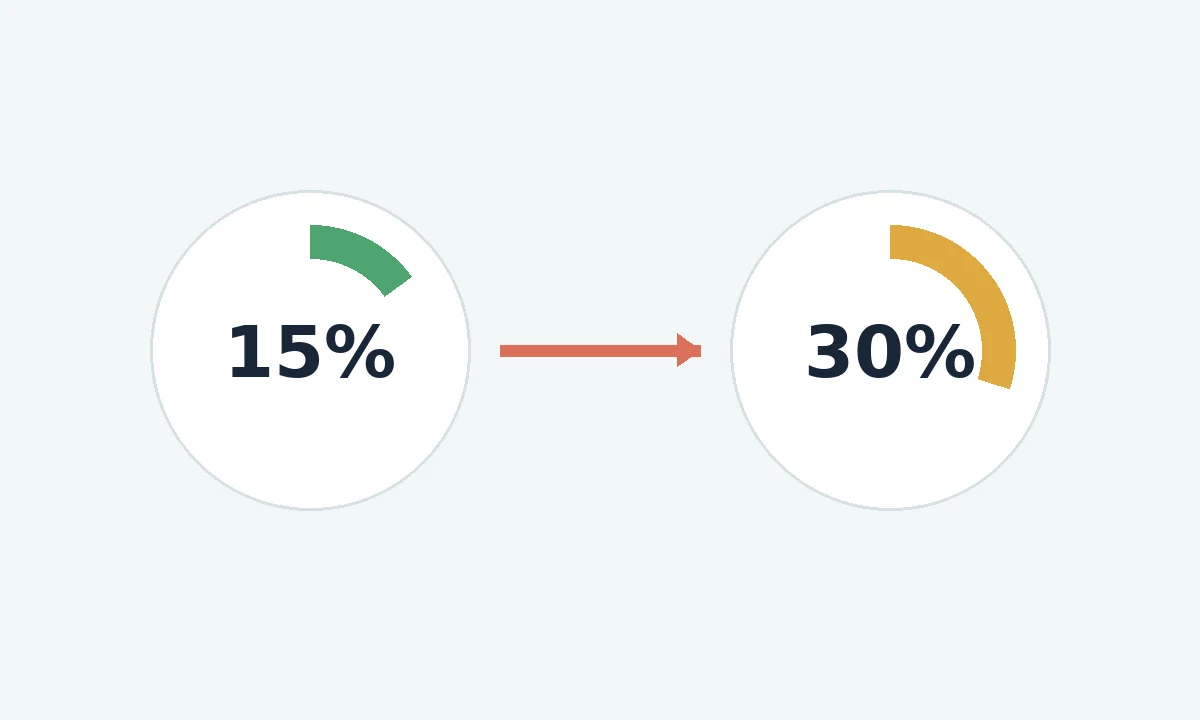
Your total available revolving credit is $20,000.
If your reported balances total $3,000, your overall utilization is 15%.
If you close Card A and the balances remain the same, total available credit falls to $10,000 and utilization rises to 30%.
FCAC generally recommends trying to use less than 30% of your total available credit.
Closing a card can therefore change utilization even when your debt has not increased.
Why switching cards can still be a good decision
A card does not need to be kept forever to protect your credit profile.
There are good reasons to change.
The card no longer fits your spending
Life changes.
Maybe you used to travel frequently and now travel very little. Perhaps your grocery spending has increased. Maybe you use a different loyalty program. A card that was excellent five years ago may be mediocre today.
The annual fee is no longer justified
A card costing $150 or $200 per year needs to keep providing enough value.
If you no longer use its benefits and a lower-cost card fits your needs better, paying a fee only to preserve the card’s age may be poor value.
The program has deteriorated
Earn rates, credits, benefits and redemption rules can change.
Loyalty to a card is not a goal in itself.
A new card materially improves your wallet
Adding or replacing a card can make sense when it fills an important gap: stronger rewards in a major category, no foreign transaction fee, genuinely useful travel benefits or a materially higher net return.
The key word is materially.
Switching to gain $15 per year is very different from switching to gain several hundred dollars while better matching your needs.
What about welcome bonuses?
Welcome offers make new cards especially attractive.
They can be valuable, but they should not become the only reason to make repeated applications.
A bonus is temporary.
The new credit application, new account, fees and management burden are real.
You therefore need two separate calculations:
first-year value
and
recurring value after the bonus.
A card can be excellent for twelve months and mediocre afterward.
The problem with switching too frequently
A new credit card application usually involves a credit check by the lender.
FCAC lists credit-card applications among the types of credit checks that can affect your credit score. It also warns that too many applications in a short period can make lenders think you are urgently seeking credit or living beyond your means.
There is no universal rule saying everyone must wait exactly three, six or twelve months between card applications.
Credit-scoring formulas are not fully public.
The better question is:
Does this new application create enough value to justify a new account and a new credit check?
Switching cards is not the same as closing the old one
This distinction matters.
You can apply for a new card without automatically closing an existing card.
When an older account:
- has no fee;
- remains easy to monitor;
- does not encourage overspending;
- contributes to your credit history and available credit;
keeping it may be reasonable.
At the other extreme, accumulating ten unused cards simply because you are afraid to close anything can become difficult to manage.
FCAC also emphasizes maintaining only the accounts you need and can manage responsibly.
The right answer is a balance.
What if the old card has an annual fee?
That makes the decision more interesting.
Suppose an older card costs $150 per year but now provides only about $50 of value to you.
Paying a net $100 every year solely to keep that product is usually not attractive.
Before closing it, it may be worth asking the issuer whether a product switch to a lower-fee or no-fee card is available.
The details and consequences vary by issuer. Confirm what happens to the account history, card number, rewards and benefits before making a change.
The “core cards + opportunities” strategy
For many consumers, Carte IQ conceptually favours a two-layer strategy.
Step 1: keep a few core cards
A core card is one you are comfortable holding for a long time because it meets an enduring need.
It may be:
- no-fee;
- one of your older accounts;
- easy to manage;
- useful for a recurring spending category;
- tied to a loyalty program you use;
- a good backup card.
Step 2: add or replace selectively
A new card should solve a real problem or create substantial value.
For example:
- your spending habits changed;
- a major category is poorly rewarded;
- a travel benefit becomes genuinely useful;
- your current card was materially devalued;
- another card offers meaningfully stronger recurring value.
The welcome bonus can be an additional benefit, but not the sole justification.
When should you be especially cautious?
If you expect to apply soon for major financing — such as a mortgage or auto loan — making several new credit applications immediately beforehand may add unnecessary risk.
Lenders use their own underwriting criteria and do not look at the credit score alone.
A rewards strategy should never complicate a much larger financial objective.
An example
Suppose you have:
Card A
- held for 12 years;
- no annual fee;
- average rewards;
- $10,000 limit.
Card B
- new;
- $120 annual fee;
- excellent for your main spending;
- estimated net value $300 per year higher.
It can be perfectly rational to obtain Card B and keep Card A.
You improve rewards without necessarily giving up the older account.
If Card A instead cost $180 and no longer served any purpose, keeping it would deserve another look.
What Carte IQ should recommend
Carte IQ should never try to maximize the number of new cards.
The objective is to measure the marginal value of a change:
How much does this new card really add compared with what you already have?
If the gain is small, doing nothing can be the best recommendation.
If the gain is material, Carte IQ can suggest the change while clearly noting that a new credit application is required.
A portfolio engine can also recommend an acquisition sequence rather than encouraging several applications at once.
Key takeaway
Always keeping the same cards is not automatically optimal.
Constantly switching is not automatically optimal either.
For many people, the most balanced approach is to:
- keep a few useful core cards long term;
- avoid unnecessarily closing older no-fee accounts;
- reassess fee-based cards annually;
- add or replace a card only when it creates meaningful value;
- avoid clustered applications without a strong reason;
- prioritize financial health over bonuses.
The best credit-card strategy is not the one that changes most often. It is the one that changes only when the change genuinely improves your situation.
Frequently asked questionsIs it bad for my score to close an old credit card?
It can have an effect, including by reducing available credit and changing your overall credit profile. The exact impact varies by file and scoring model.
Should I keep my oldest card forever?
No. Its age can be useful, but fees, ease of management and your overall situation matter too.
How long should I wait between card applications?
There is no universal waiting period for everyone. FCAC recommends avoiding multiple or overly frequent applications and applying for credit when it is genuinely needed.
Is it a good idea to open cards only for bonuses?
Carte IQ does not recommend that as a general strategy. Bonuses should be weighed against fees, terms, repeated applications and your ability to pay the balance in full.
Is it better to keep one card for a very long time?
For some people, yes. For others, a few complementary cards may create more value. Simplicity also has value.
Sources consulted
- Financial Consumer Agency of Canada — Improving your credit score, updated 2026.
- Financial Consumer Agency of Canada — Cancelling a credit card.
- Financial Consumer Agency of Canada — Credit report and score basics.
- Financial Consumer Agency of Canada — Paying back debt.
Related articles
- Is it bad to apply for several credit cards in a short period?
- What happens when you apply for a new credit card?
- One credit card or several: which strategy works best?
Compare based on your situation
The examples in this article are general. Carte IQ aims to apply these principles to your spending, preferences and available cards to explain the estimated value behind each recommendation.