What happens when you apply for a new credit card?
Credit check, new account and credit score: here is what may happen when you apply for a new credit card in Canada.

In this guide
- 1. You provide information to the issuer
- 2. The lender may check your credit file
- 3. One application does not automatically mean a large score drop
- 4. If you are approved, a new account may appear
- 5. A new account can change the age of your credit profile
- 6. A new limit can improve utilization
- 7. The best way to use a new card remains simple
- 8. Why several applications close together are different
- 9. Rate-shopping rules do not apply the same way to credit cards
- 10. Approval is not guaranteed even with excellent credit
- 11. What should you do before applying?
- 12. What if the application is declined?
- The Carte IQ principle
- Key takeaway
- Does checking my own credit score lower it?
- Does a credit-card application appear on my credit file?
- How many points will my credit score fall?
- Can a new card also help my credit profile?
- Should I avoid every new card before a mortgage?
- Sources consulted
- Related articles
- Compare based on your situation
Clicking “Apply” looks simple.
Behind the scenes, however, a credit-card application can trigger several events: a credit-file check, a lending decision, the opening of a new account and changes to factors that may be considered in your credit score.
That does not mean applying for a card is bad.
Occasionally applying for credit is a normal part of financial life.
But understanding what happens can help you avoid unnecessary applications.
1. You provide information to the issuer
A card application typically asks for information such as:
- your identity;
- address;
- income;
- employment;
- sometimes expenses or other financial details.
Requirements vary by card and institution.
The issuer uses this information along with its internal process to decide whether to approve the application and, if approved, what credit limit to offer.
A very strong credit score therefore does not guarantee approval.
2. The lender may check your credit file
In Canada, a credit-card application normally involves a credit check by the lender.
The Financial Consumer Agency of Canada (FCAC) distinguishes two broad types.
Hard inquiry
A credit-card application is an example of a credit check that can appear on your file and affect your score.
Other lenders reviewing your file may also see those inquiries.
Soft inquiry
Checking your own credit report or score does not lower your credit score.
Some checks related to administering an existing account may also be considered soft inquiries.
This distinction matters: checking your own score is not the same as applying for a new card.
3. One application does not automatically mean a large score drop
Consumers often want a precise number:
How many points will my score fall?
There is no universal answer.
FCAC notes that credit bureaus and lenders use different formulas and do not publish all details of their scoring models.
The effect of a new application therefore depends on your full credit profile.
Someone with a long, stable history may be affected differently from someone with a thin file or several recent inquiries.
Claims such as “every application costs exactly X points” should be treated with caution.
4. If you are approved, a new account may appear
After approval and account opening, the issuer may report the account to the credit bureaus.
Your file may then reflect items such as:
- opening date;
- limit;
- balance;
- payment history;
- account status.
Over time, that account can contribute positively to your credit history if it is managed responsibly.
A new credit card is therefore not simply a negative event.
It also becomes a new credit line that can be managed well.
5. A new account can change the age of your credit profile
FCAC indicates that the length of your credit history and the age of accounts are among the factors generally considered.
Adding a very recent account can make the overall profile somewhat younger.
This may be more relevant for people with relatively short histories or several newly opened accounts.
Again, the exact scoring impact is not public and varies by model.
6. A new limit can improve utilization
There is also an effect that can move in the other direction.
Suppose you have one card:
- limit: $5,000;
- reported balance: $1,500.
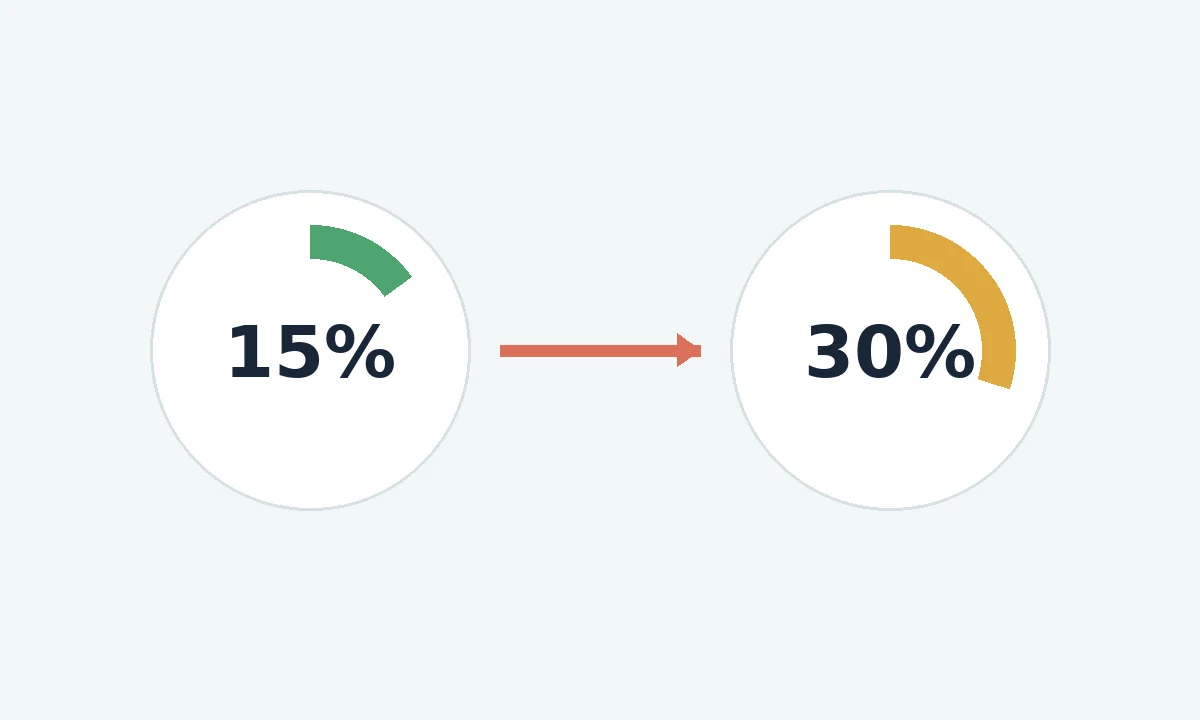
Your utilization is 30%.
You then obtain another card with a $5,000 limit and carry no balance on it.
Total available credit rises to $10,000. With the same $1,500 total balance, overall utilization becomes 15%.
FCAC recommends trying to use less than 30% of your total available credit.
A new credit limit can therefore improve that ratio — as long as the new capacity is not used to increase debt.
7. The best way to use a new card remains simple
Rewards do not change the basic rules.
FCAC recommends aiming to pay the balance in full each month.
If you do not pay the full balance, interest can quickly exceed the rewards earned.
A new card should be used to optimize purchases you already planned to make, not create a new spending budget.
8. Why several applications close together are different
An occasional application is normal.
Several applications in a short period can be interpreted differently.
FCAC notes that many credit checks over a short period may make lenders think you are urgently seeking credit or spending beyond your means.
That is why Carte IQ should never turn a list of good cards into an invitation to apply for all of them at once.
The second or third card should add enough incremental value to justify another application.
9. Rate-shopping rules do not apply the same way to credit cards
FCAC explains that when shopping for an auto loan or mortgage, inquiries with several lenders during a short period may be treated as one inquiry for rate-shopping purposes; it recommends completing that shopping within roughly two weeks.
You should not extrapolate that rule to credit cards.
Applying for three cards on the same day is not simply the equivalent of getting three mortgage quotes.
10. Approval is not guaranteed even with excellent credit
Issuers can consider many elements:
- their own risk policy;
- income;
- financial obligations;
- your relationship with the institution;
- your history with the issuer;
- number of recent accounts;
- other internal criteria.
Credit score matters, but it is not an automatic ticket to any card.
That is also why Carte IQ should distinguish card value from eligibility or approval-related conditions whenever such information is available.
11. What should you do before applying?
A short review can help avoid an unnecessary application.
Check basic eligibility
Income requirements, residency, province, age, customer type and other conditions.
Check your credit file
Reviewing your own file does not lower your score and can help you identify an error before an important application.
Look at your recent inquiries
If you recently opened several accounts, ask whether another card is really necessary now.
Calculate net value
Compare:
- rewards;
- annual fees;
- benefits you will genuinely use;
- welcome bonus;
- value after the first year.
Consider upcoming financing
If a mortgage or other major financing is approaching, stability may be more valuable than a few extra points.
12. What if the application is declined?
A decline does not necessarily mean your credit score is poor.
The institution may have applied a specific underwriting criterion.
Avoid reacting by immediately submitting several new applications elsewhere without understanding the reason.
It may be better to:
- review your credit file;
- confirm the information you submitted;
- contact the issuer if a reconsideration process exists;
- wait before making several new applications.
The Carte IQ principle
A card ranked first is not automatically a card to apply for today.
Carte IQ should communicate two separate messages:
This card appears to provide strong value for your profile.
and
Getting this card requires a new credit application.
The final decision needs to reflect the user’s broader financial context.
Key takeaway
When you apply for a credit card:
- the issuer evaluates the application;
- a hard credit check is normally performed;
- if approved, a new account may be reported;
- your account age and available credit can change;
- managing the new account responsibly becomes more important than the application itself.
An occasional application is normal.
Carte IQ is mainly designed to discourage unnecessary, clustered and poorly planned applications.
Frequently asked questionsDoes checking my own credit score lower it?
No. FCAC says checking your own credit report or score does not affect your score.
Does a credit-card application appear on my credit file?
Yes. A card application is normally considered a hard credit inquiry.
How many points will my credit score fall?
There is no universal number. Models vary and the exact formulas are not public.
Can a new card also help my credit profile?
It can increase available credit and, if well managed, contribute over time to a positive history. That does not mean you should open accounts solely to improve your score.
Should I avoid every new card before a mortgage?
It is prudent to avoid unnecessary applications before major financing. Your individual situation and the lender’s underwriting rules remain important.
Sources consulted
- Financial Consumer Agency of Canada — Credit report and score basics.
- Financial Consumer Agency of Canada — Improving your credit score.
- Financial Consumer Agency of Canada — Using your credit card responsibly.
- Financial Consumer Agency of Canada — Choosing a credit card.
Related articles
- Is it bad to apply for several credit cards in a short period?
- Should you switch credit cards often or keep the same ones?
- One credit card or several: which strategy works best?
Compare based on your situation
The examples in this article are general. Carte IQ aims to apply these principles to your spending, preferences and available cards to explain the estimated value behind each recommendation.