How much is a reward point really worth?
An Aeroplan, Membership Rewards or Scene+ point does not always have the same value. Learn how Carte IQ estimates real point value and compares programs.

In this guide
- The most useful formula
- Three different values that should not be confused
- Scene+: a relatively simple example
- Membership Rewards: flexibility has value
- Aeroplan: why there is no single price for a point
- Taxes and fees matter
- The advertised cash price may not be the best reference
- Why Carte IQ uses valuation assumptions
- Conservative, typical and optimized values
- Do not choose a card only because its points are “worth more”
- Points can lose value
- Should you accumulate points for years?
- Key takeaway
- How much is a Scene+ point worth?
- How much is a Membership Rewards point worth?
- How much is an Aeroplan point worth?
- Is 2 cents per point always excellent?
- Does Carte IQ guarantee the displayed point value?
- Sources consulted
- Related articles
- Compare based on your situation
You often hear statements such as “a point is worth one cent” or “my points are worth two cents each.”
Those shortcuts are convenient, but they can also be misleading.
A point’s value depends first on the program and then on how it is redeemed. In some programs, value is fairly stable across several uses. In others, it can vary significantly depending on the flight, date, destination or redemption method.
That is why Carte IQ does not treat a “point” as a universal unit.
The most useful formula
For a specific redemption, the calculation is straightforward:
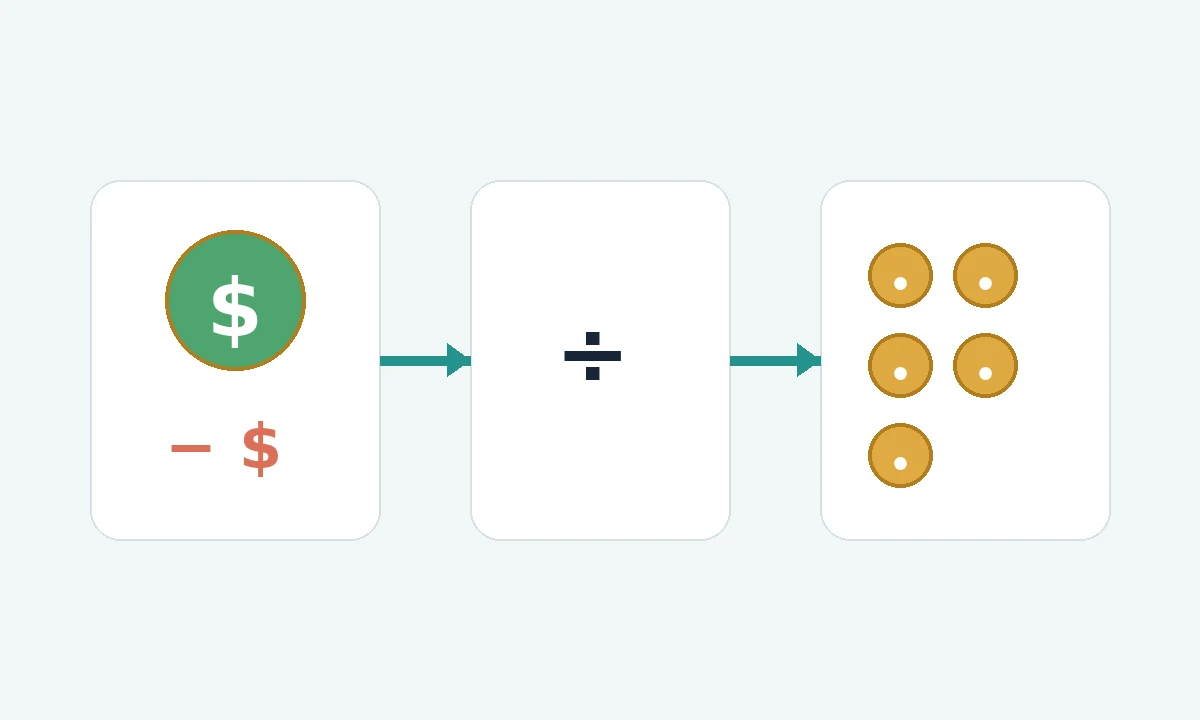
Value per point = dollar value received ÷ number of points used
If 50,000 points let you avoid a $500 expense:
$500 ÷ 50,000 = $0.01 = 1 cent per point
If the same 50,000 points instead replace a $1,000 expense:
$1,000 ÷ 50,000 = $0.02 = 2 cents per point
The number of points only becomes meaningful once it is connected to what those points actually buy.
Three different values that should not be confused
Carte IQ ideally distinguishes three concepts.
1. Guaranteed or easily accessible redemption value
This is the value a user can generally obtain without a complex strategy.
For example, Scene+ currently offers several redemptions at 100 points for $1, including certain travel redemptions, and 1,000 points for $10 at participating grocery partners. That equals 1 cent per point for those uses.
That can be a strong reference value when it applies to spending the user would make anyway.
2. Potential value
Some programs can sometimes produce more.
American Express Membership Rewards, for example, offers several redemption methods. Flexible Points Travel currently provides a $10 travel credit for 1,000 points, or one cent per point. Points can also be used through fixed-points travel options or transferred to certain partners, where the realized value may differ.
Higher potential value is not guaranteed.
3. Personal value
Two people can receive exactly the same theoretical redemption and still value it differently.
A traveller who would genuinely have paid $800 for a ticket obtained with points can reasonably say those points displaced close to $800 of spending.
But if someone uses 60,000 points for a $3,000 premium cabin they would never have purchased with cash, claiming to have “saved $3,000” may overstate the economic value for that person.
A better question is:
How much would you actually have been willing to pay for what the points gave you?
Scene+: a relatively simple example
Scene+ is useful because several redemption options are easy to value.
As of August 2026, the program indicates, among other things:
- 1,000 points = $10 at participating grocery partners;
- 100 points = $1 on eligible Scene+ Travel bookings;
- 100 points = $1 for certain movie purchases;
- several other partners also use a value of one cent per point.
That provides a reference of 1¢ per point for many common uses.
But not every option is identical. Some statement-credit options associated with specific products can use a different rate. The exact redemption method matters.
Membership Rewards: flexibility has value
American Express Membership Rewards is a good example of why Carte IQ does not want to use a single value in every case.
Current Canadian terms provide several options. Flexible Points Travel offers a $10 travel credit for 1,000 points. Some gift-card options may be less attractive, while fixed-points travel can generate a different value depending on ticket price.
Points may also be transferred to certain partner programs.
That flexibility matters: a flexible point can be more useful than a point locked into a single redemption system even when both appear to have the same baseline value.
Carte IQ should not, however, automatically assign every point the highest theoretical value imaginable.
Aeroplan: why there is no single price for a point
Aeroplan works differently.
For Air Canada flights, the number of points required is linked to factors that include the cash price, and Aeroplan publishes guidance ranges. During periods of high demand, the number of points required can be higher.
For many partner airlines, pricing is more structured by distance. Taxes and fees may still apply, including partner booking fees in some cases.
As a result, one Aeroplan point can produce very different values from one booking to the next.
Simplified example
Suppose:
- cash ticket: $750;
- reward ticket: 40,000 points + $75 in taxes and fees.
Approximate value attributable to the points:
($750 − $75) ÷ 40,000 = 1.69 cents per point
If the same ticket were selling for only $500:
($500 − $75) ÷ 40,000 = 1.06 cents per point
Same program. Same number of points. Very different value.
Taxes and fees matter
A common mistake is to compare the full cash price with the number of points without subtracting what you still have to pay.
If a ticket costs $900 or 50,000 points + $200, the points are not replacing $900 of spending.
They are replacing about $700.
So the value is:
$700 ÷ 50,000 = 1.4 cents per point
The same principle applies to booking fees, surcharges and other mandatory costs.
The advertised cash price may not be the best reference
Suppose a business-class ticket costs $5,000, but you personally would have bought an economy ticket for $1,200.
If you use points for business class, calculating value only from the $5,000 retail price may produce an impressive number that overstates what you actually saved.
Two perspectives can therefore be useful:
market value: based on the public price of the product received;
personal economic value: based on the spending you would realistically have made.
Carte IQ favours a prudent approach when comparing cards for real consumers.
Why Carte IQ uses valuation assumptions
To rank cards, points still need to be converted into dollars.
A card generating 30,000 points in one program cannot be directly compared with a card generating 20,000 points in another.
Carte IQ therefore needs reference values.
Those values should be:
- explicit;
- traceable;
- consistent across cards;
- revisable when programs change;
- clearly separated from official data when they are engine assumptions.
A Carte IQ valuation is not a promise of return.
It is a comparison assumption.
Conservative, typical and optimized values
A useful way to explain a program is to show several scenarios.
Conservative value
What a user can obtain easily without searching for an exceptional redemption.
Typical value
An estimate representative of reasonably efficient use.
Optimized value
What an experienced user may sometimes achieve through especially favourable redemptions.
These figures answer different questions.
Carte IQ can use a central value for ranking while showing a range when uncertainty is material.
Do not choose a card only because its points are “worth more”
A 2-cent point is not automatically better than a 1-cent point.
You also need to know how many points you earn.
A card earning 1 point worth 2 cents per dollar produces a 2% return.
Another earning 4 points worth 1 cent produces a 4% return.
A better formula is:
Earn rate × point value = approximate return
Then you still need to account for caps, annual fees and benefits.
Points can lose value
Loyalty programs can change:
- redemption rates;
- partners;
- reward charts;
- terms;
- available options.
That is another reason not to treat a valuation as permanent.
A comparison database should store the date and sources for each valuation and review them regularly.
That is the approach Carte IQ is designed to follow.
Should you accumulate points for years?
Not necessarily.
Saving toward a specific goal can make sense. Accumulating indefinitely because you expect points to become more valuable is riskier.
Points are not an investment. Program rules can change and their value is generally not guaranteed like a bank deposit.
A reasonable strategy is to:
- define a goal;
- accumulate enough;
- use the points when a good opportunity aligned with that goal appears.
Key takeaway
A point’s value is not defined by its name.
It is defined by what it can actually buy.
Carte IQ therefore aims to compare programs using realistic monetary values while separating official program values, engine assumptions and optimized scenarios.
A good point is not the one with the highest theoretical value. It is the one you can actually use efficiently for your needs.
Frequently asked questionsHow much is a Scene+ point worth?
Several common options currently provide one cent per point, such as 1,000 points for $10 at participating grocery partners or 100 points for $1 through Scene+ Travel. Some specific options may use another rate.
How much is a Membership Rewards point worth?
There is no single value for every use. Flexible Points Travel currently offers $10 for 1,000 points, while fixed-points travel or partner transfers can produce a different value.
How much is an Aeroplan point worth?
Aeroplan does not have one universal cash value. The realized value depends on the ticket, points required, cash price and taxes or fees that still need to be paid.
Is 2 cents per point always excellent?
Not necessarily. Check whether you would actually have paid the cash price used in the calculation and consider how quickly you earned those points.
Does Carte IQ guarantee the displayed point value?
No. Values used to compare programs are estimates or reference values and can change.
Sources consulted
- American Express Canada — Membership Rewards Program Terms and Conditions, consulted August 24, 2026.
- Air Canada — Aeroplan, flight rewards and reward policy, consulted August 24, 2026.
- Scene+ — earning and redeeming Scene+ points; Scene+ Travel, consulted August 24, 2026.
Related articles
- Is a 5× card really better than a 3× card?
- Points or cash back: how should you choose?
- How Carte IQ ranks credit cards
Compare based on your situation
The examples in this article are general. Carte IQ aims to apply these principles to your spending, preferences and available cards to explain the estimated value behind each recommendation.