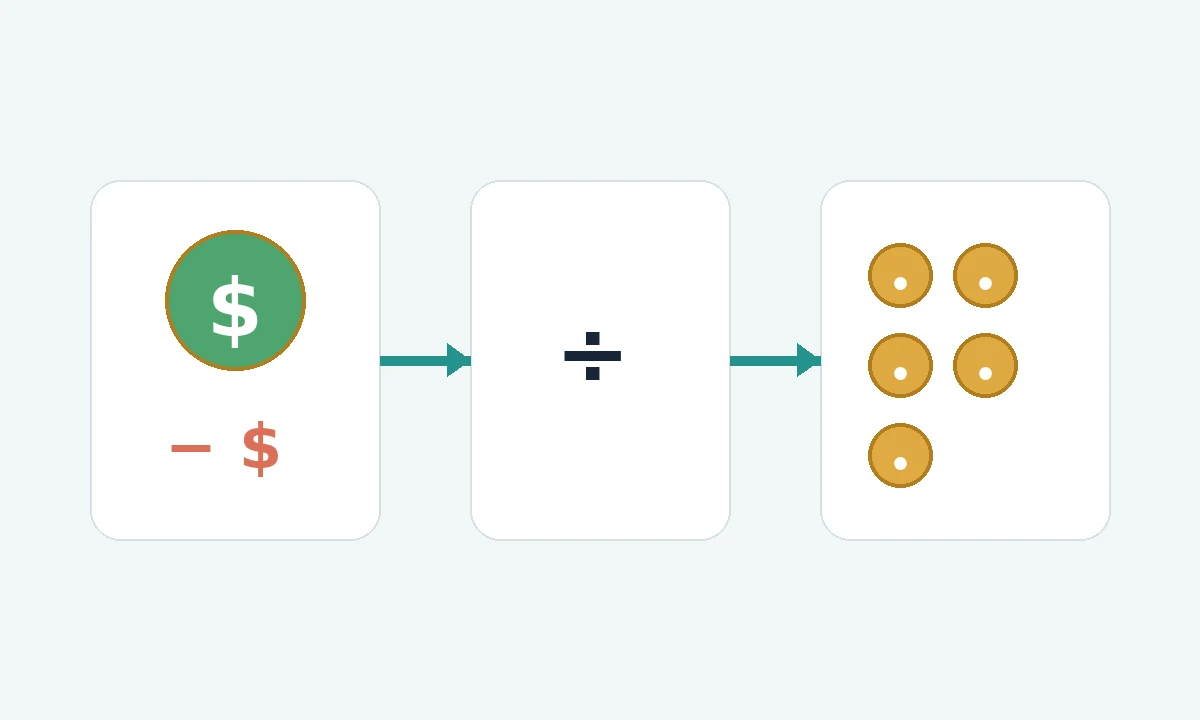
Points or cash back: how should you choose?
Travel points or cash back? Compare return, flexibility, simplicity, devaluation risk and spending habits to choose the reward type that fits you.

In this guide
- The biggest strength of cash back: certainty
- The biggest strength of points: potential
- Not all point programs are complicated
- Five questions to ask yourself
- Cash back can have limits too
- Simplified comparison
- The risk of overvaluing your points
- Time matters
- A hybrid strategy can work very well
- If you carry a balance, the discussion changes
- How Carte IQ decides
- Key takeaway
- Do points always earn more than cash back?
- Does a 1-cent point equal 1%?
- Can cash back expire or have conditions?
- Are travel points better for frequent travellers?
- Can I combine cash back and points?
- Sources consulted
- Related articles
- Compare based on your situation
One card offers 4% cash back.
Another offers 5 points per dollar.
Which one is better?
Those two numbers alone are not enough to answer.
Cash back and points are different types of rewards. The better choice depends on how you redeem, how much complexity you are comfortable with and, most importantly, how much real value you can extract from the points.
The biggest strength of cash back: certainty
A 2% cash-back rate is easy to understand.
On $10,000 of eligible spending:
$10,000 × 2% = $200
There may be caps or payout rules, but the value is usually easier to measure than with a travel program.
That simplicity has real value.
You do not need to:
- find flight availability;
- compare several loyalty programs;
- follow reward charts;
- transfer points;
- optimize cents per point.
For someone who does not want rewards to become a hobby, cash back can be excellent.
The biggest strength of points: potential
Points can offer higher value when the right conditions come together.
Suppose a card earns 3 points per dollar.
If each point is redeemed at 1 cent:
3 × 1¢ = 3%
If you can redeem them at 1.5 cents:
3 × 1.5¢ = 4.5%
The potential is higher.
But “potential” is the important word.
If you eventually redeem those same points for only 0.7 cent each:
3 × 0.7¢ = 2.1%
The same card can therefore be excellent or average depending on how rewards are used.
Not all point programs are complicated
Some programs have fairly straightforward values for several redemption options.
Scene+, for example, currently offers several redemptions at one cent per point, including participating grocery partners and Scene+ Travel.
In that case, earning 3 points per dollar can often be interpreted as roughly 3% value on an eligible purchase when points are later redeemed at one cent each.
Other programs, such as Aeroplan, are much more variable for flights.
So the real comparison is not simply “points versus cash back.”
It is which program, which card and which redemption method.
Five questions to ask yourself
1. Do you actually travel?
If you travel rarely and have no specific goal, accumulating travel points for years is not automatically advantageous.
A slightly lower cash-back rate that you use every year can be more valuable than a higher theoretical travel value you never realize.
2. Are you flexible?
Travel programs often reward flexibility.
Being flexible about:
- dates;
- destinations;
- airlines;
- cabins;
can increase the value you receive.
If you must travel on one exact Friday evening during March break, point availability may be less attractive.
3. Do you enjoy optimizing?
Some people enjoy comparing redemption options.
Others just want rewards to appear as a credit.
Neither approach is inherently better.
Carte IQ should account for this preference because an extremely optimizable program has less practical value for someone who does not want to optimize it.
4. Do you have a specific goal?
Points are easier to value when you know what you want to do with them.
For example:
- a family trip;
- a business-class ticket;
- hotel stays;
- grocery savings.
Without a goal, cash back has the advantage of being universal.
5. Are you comfortable with changing rules?
Point programs can change rates, partners and redemption options.
Cash back denominated in dollars is usually more intuitive.
A point balance is not a guaranteed investment.
Cash back can have limits too
Cash back is not always uniform.
A card may offer:
- 4% on groceries;
- 2% on gas;
- 1% elsewhere;
with caps or conditions.
You still need to calculate the real average return across all of your spending.
A card advertised as “4% cash back” can produce much less than 4% overall.
Simplified comparison
Suppose you spend $24,000 per year.
Cash-back card
- actual average return: 2%;
- cash back: $480;
- annual fee: $0.
Net value: $480
Points card
- 36,000 points earned;
- realistic valuation: 1.5¢;
- point value: $540;
- annual fee: $120.
Net value: $420
Despite a higher gross reward value, the points card loses after fees.
But if those points are redeemed at 2¢:
36,000 × $0.02 = $720
$720 − $120 = $600
The points card becomes better.
The result depends on value that is realistically accessible to the user.
The risk of overvaluing your points
A common mistake is to use the maximum value someone found online.
For example:
“I saw someone get 4 cents per point, so my 100,000 points are worth $4,000.”
Not necessarily.
That person may have found exceptional availability for a very expensive ticket they genuinely wanted.
A personal valuation should be reasonably repeatable for your own habits.
Carte IQ favours a conservative or typical valuation for rankings, with an optimized scenario shown separately when useful.
Time matters
Cash back can generally be used quickly.
Points may require building a balance before an attractive redemption becomes possible.
That delay has an implicit cost.
If you need three years to reach your target and the program changes in the meantime, the outcome changes.
That does not mean points are bad.
It simply means a dollar today and a variable-value point later are not identical.
A hybrid strategy can work very well
You do not have to choose one side.
A wallet can combine:
- a points card where the earn rate is exceptional;
- a cash-back card for spending that is poorly covered;
- a no-fee backup card.
The goal is not to own the most cards.
The goal is to cover spending with limited overlap and acceptable complexity.
If you carry a balance, the discussion changes
FCAC notes that credit cards charge interest when the balance is not paid in full by the due date.
If you regularly pay interest, the interest rate matters far more than the difference between 2% and 4% rewards.
In that situation, finding the best rewards card is usually not the priority.
How Carte IQ decides
Carte IQ should not simply ask:
Do you prefer points or cash back?
It should consider:
- your spending;
- travel goals;
- preferred programs;
- tolerance for complexity;
- ability and willingness to redeem points efficiently;
- fees;
- caps;
- realistic point value.
Two people spending exactly the same amount can therefore receive different recommendations.
Key takeaway
Choose cash back if you mainly value:
- simplicity;
- certainty;
- flexibility in dollars;
- low maintenance.
Points may be more attractive if you value:
- travel;
- higher upside from good redemptions;
- flexibility across partners;
- optimization.
And a hybrid strategy can combine both.
The best reward is not the one with the highest theoretical value. It is the one you will actually use.
Frequently asked questionsDo points always earn more than cash back?
No. They may offer more upside, but fees, earn rates and the actual redemption value determine the result.
Does a 1-cent point equal 1%?
Only if you earn 1 point per dollar. At 5 points per dollar and one cent per point, the theoretical return is 5%.
Can cash back expire or have conditions?
Yes. Terms vary by card, so the applicable program rules matter.
Are travel points better for frequent travellers?
Often, but not automatically. Destinations, flexibility and actual redemption value matter.
Can I combine cash back and points?
Yes. A simple combination of complementary cards can be more efficient than one card if the incremental value justifies the added complexity.
Sources consulted
- Financial Consumer Agency of Canada — Choosing a credit card.
- Financial Consumer Agency of Canada — Using your credit card responsibly.
- Scene+ — Earning and redeeming Scene+ points.
- American Express Canada — Membership Rewards Program Terms and Conditions.
- Air Canada — Aeroplan and flight rewards.
Related articles
- How much is a reward point really worth?
- Is a 5× card really better than a 3× card?
- Should you pay an annual fee for a credit card?
Compare based on your situation
The examples in this article are general. Carte IQ aims to apply these principles to your spending, preferences and available cards to explain the estimated value behind each recommendation.